
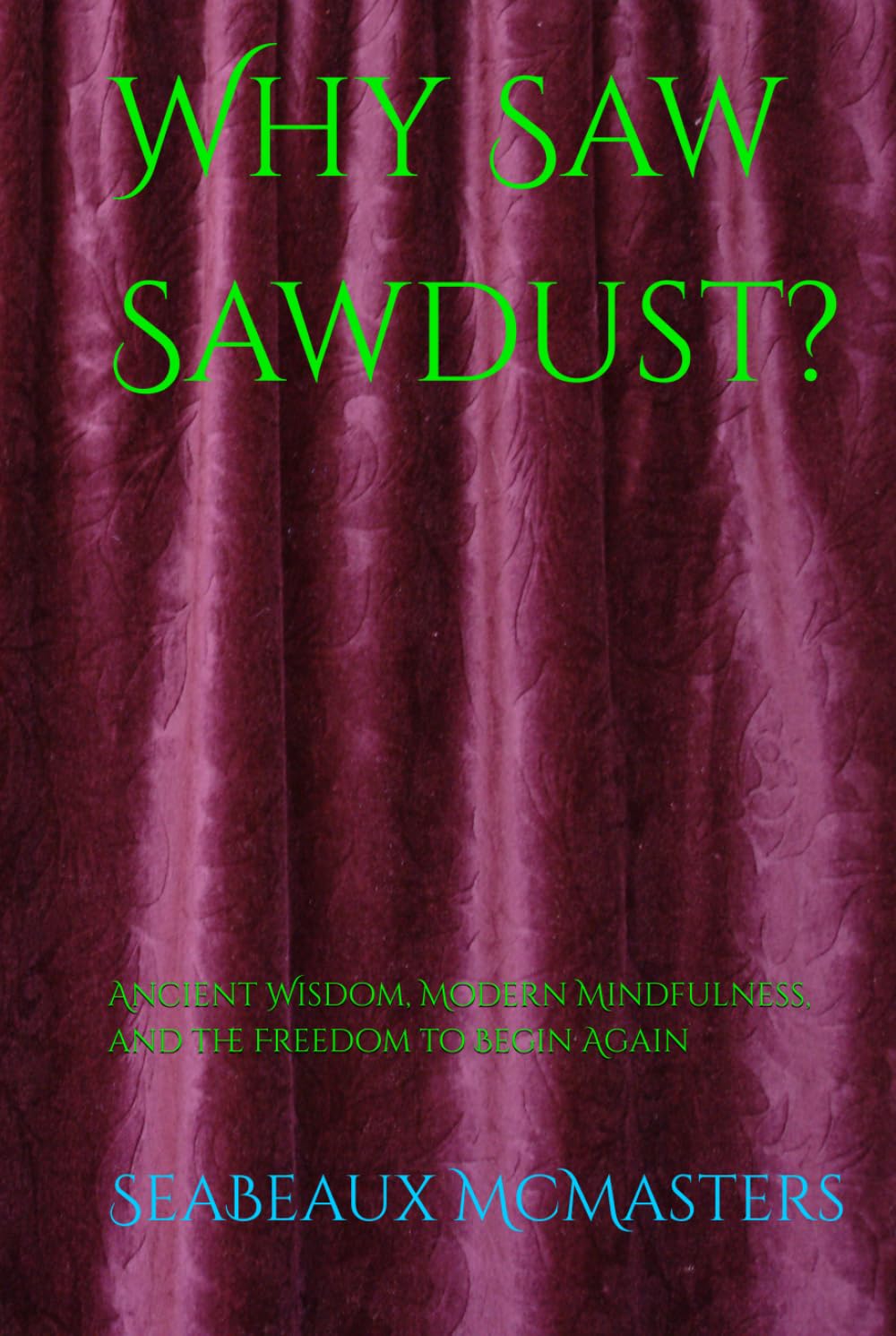
Why Saw Sawdust?: Ancient Wisdom, Modern Mindfulness, and the Freedom to Begin Again Hardcover – April 17, 2026
Product details
| Management number | 222076596 | Release Date | 2026/05/04 | List Price | US$10.80 | Model Number | 222076596 | ||
|---|---|---|---|---|---|---|---|---|---|
| Category | |||||||||
What do Marcus Aurelius, the Buddha, Epictetus, and a Japanese master carpenter interned in southern Idaho during World War II have in common? They never met. They worked in different traditions, lived in different centuries, and faced radically different circumstances. Yet every one of them arrived at the same diagnosis of the central problem of human attention, and the same practical remedy for it.Why Saw Sawdust is a scholar's investigation of that remedy.A carpenter's shop produces sawdust. It is the residue of every cut already made, every decision already rendered, every piece of wood that has been transformed and cannot be transformed back. The craftsman who bends over that floor and attempts to recut the sawdust accomplishes nothing except exhaustion. The grain is gone. The cut has been made. There is nothing there to work with. Yet research conducted at Harvard University found that the average person spends forty-seven percent of their waking hours thinking about something other than what they are currently doing, and that the mind's preferred destinations, when it leaves the present, are the regrettable past and the feared future. The human mind saws sawdust almost constantly. And it has been doing so for as long as there are records to tell us.Drawing on three thousand years of contemplative practice, fifty years of clinical psychology and cognitive behavioral research, and three decades of neuroscience that has located the mechanisms of both the problem and its remedy in observable brain structure, Sir SeaBeaux McMasters builds the most integrative and practically grounded case yet made for a simple but consequential proposition. The past cannot be worked. The present always can. And the capacity to return to it, again and again, is the most important skill a human being can develop.This is not a wellness manual offering permanent peace. It is an evidence-based examination of the oldest documented problem of the human mind, written by someone who did not study it from a comfortable distance.WHAT YOU WILL DISCOVER INSIDEPart I. The Nature of the Mind. Two thousand five hundred years of evidence examined through a single lens. What the wandering mind actually is, what mindfulness actually means when precision replaces popularity, and what the neuroscience of presence reveals about what the contemplative traditions were describing all along.Part II. The Master Tool. The foundational practices through which the capacity for presence is built. The breath as anchor, the body as compass, the witness position that creates distance between being a thought and watching one, and the alchemical work of transforming difficult emotional experience into usable energy rather than carried weight.Part III. The Laws of Release. Why the mind goes back, what rumination is doing in the brain and why it persists, the precision tool of forgiveness examined without sentimentality, and the most advanced capacity the practice ultimately builds. The freedom to begin again. Not once, but in every moment that requires it.Part IV. The Architecture of Daily Life. The Why Saw Sawdust principle applied to the domains where it is hardest and most necessary. Relationships as the most demanding presence practice available, work and purpose as the workbench where the principle either holds or fails, and the mind-body integration that makes the whole practice livable rather than theoretical.Part V. The Master's Integration. Mindfulness as a gateway to the spiritual dimensions it has always pointed toward, self-compassion as the foundational ground without which no sustained practice is possible, and the integrated daily architecture that makes beginning again not an occasional heroic effort but a natural and renewable orientation toward the only moment where anything can actually be built. Read more
| ISBN13 | 979-8257676543 |
|---|---|
| Language | English |
| Publisher | Independently published |
| Dimensions | 6.24 x 0.79 x 9.24 inches |
| Item Weight | 15 ounces |
| Print length | 239 pages |
| Publication date | April 17, 2026 |
Bestseller ranking
Consciousness & Thought


Customers who viewed this product also viewed
Womens Ankle Socks





Correction of product information
If you notice any omissions or errors in the product information on this page, please use the correction request form below.
Correction Request Form